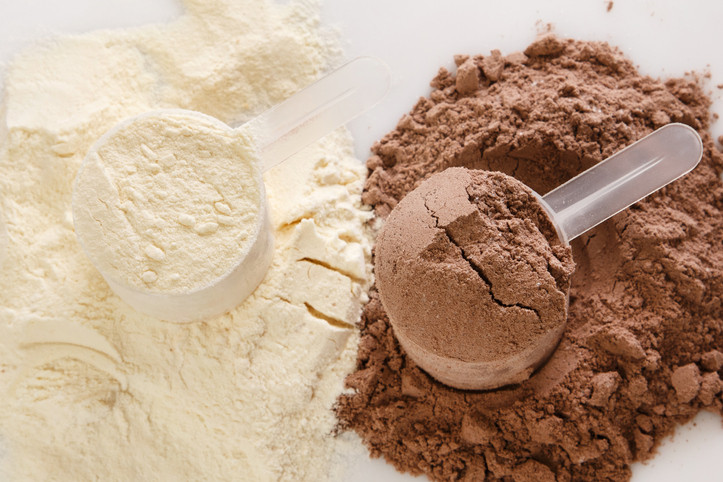
Excellent review here that supports what I have been saying for a long time: as a protein source that supports muscle growth, it’s a very poor choice. However, it’s likley of value for supporting connective tissue/tendon remodeling, and likely skin. It’s also an excellent source of the amino acid glycine, which may have some unique benefits to aging adults, and is essential for the production of glutathione as discussed in the main article on the Advanced Protein formula HERE. That’s one reason I combine highest quality protein (whey) with collagen in the Advanced Protein product. I believe there’s synergism there…Also, don’t forget to take adequate vite C as it’s essential for hydroxylation of proline and lysine during collagen formation. It should go without saying but I will say it anyway, obviously best results require a stimulus (e.g. mechanical loading via high intensity resistance training) to elicit the response needed to benefit from the collagen. Major caveat to the studies in that review is that they were short—only 3–15 weeks—and generally small, so I must end with “more data is needed” per usual:
“Collagen Supplementation on Tendon-Related Structural and Performance Outcomes: A Systematic Review“
J. Funct. Morphol. Kinesiol. 2026, 11(1), 130
Abstract
Background: Tendons adapt to mechanical loading by increasing cross-sectional area (CSA), stiffness, and matrix organization, with structural remodeling critical for both rehabilitation and performance. Collagen supplementation has been proposed to enhance this process by supplying key amino acids for collagen synthesis; however, inconsistent results across trials have limited its clinical and athletic application.
Methods: A systematic review of randomized controlled trials evaluating collagen supplementation in humans was conducted. PubMed, EMBASE, CINAHL, and Web of Science were searched from database inception through May 2025. Risk of bias was assessed using the PEDro scale (≥6/10 classified as good-to-excellent quality). Due to substantial heterogeneity in supplementation protocols, training modalities, and outcome measures, results were synthesized narratively without meta-analysis. Data extraction included collagen type, dose, training modality, intervention duration, and outcome measures.
Results: Of 887 unique citations, eight RCTs (n = 257; ages 18–52; 246 M:11 F) met the inclusion criteria. All studies incorporated resistance or plyometric training (3–15 weeks). Three of four studies reported significantly greater increases in tendon CSA in collagen groups versus placebo. Four studies investigated tendon stiffness and Young’s modulus; the two using higher doses (15–30 g/day) demonstrated significant between-group improvements favoring collagen, while lower-dose studies (~5 g) showed only within-group effects. Muscle strength improved with training in all trials, but no additive effects of collagen were observed. One study reported improvements in eccentric rate of force development and deceleration impulse with collagen, though gross explosive metrics (e.g., jump height) were unaffected.
Conclusions: Collagen supplementation (15–30 g) with vitamin C (≥50 mg) may enhance tendon remodeling when combined with high-intensity resistance training (≥70% 1 RM). The current literature suggests strong evidence (GRADE A) for increases in tendon CSA and stiffness, strong evidence (GRADE A) against an effect on muscle strength, and conflicting evidence (GRADE C) for muscle cross-sectional area and physical performance. Limitations include small sample sizes, heterogeneous protocols, and short intervention durations.

Will Brink is the owner of the Brinkzone Blog. Will has over 30 years experience as a respected author, columnist and consultant, to the supplement, fitness, bodybuilding, and weight loss industry and has been extensively published. Will graduated from Harvard University with a concentration in the natural sciences, and is a consultant to major supplement, dairy, and pharmaceutical companies.
His often ground breaking articles can be found in publications such as Lets Live, Muscle Media 2000, MuscleMag International, The Life Extension Magazine, Muscle n Fitness, Inside Karate, Exercise For Men Only, Body International, Power, Oxygen, Penthouse, Women’s World and The Townsend Letter For Doctors.
He’s also been published in peer reviewed journals.
Will is the author of the popular e-books, both accompanied by private members forum access , Bodybuilding Revealed & Fat Loss Revealed.
You can also buy Will’s other books on Amazon, Apple iBook, and Barnes and Noble.