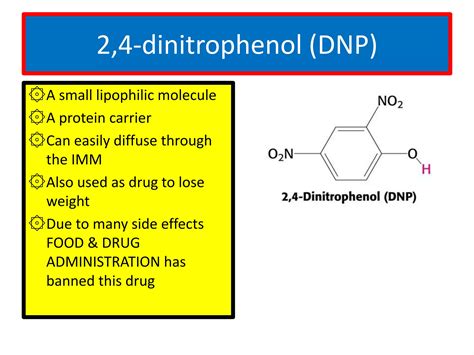
A few years ago I covered the good, the bad, and the ugly about a highly controversial compound for fat loss, known as DNP. DNP is short for 2,4-dinitrophenol. My summary of DNP was thus:
Everything negative you have heard about DNP is true. Everything positive you have heard about DNP is true.
I also mentioned that analogs of DNP were in development, hence Part II that follows below. The goal is to develop drugs that offer the benefits of DNP with a much improved safety profile. If you are not familiar with DNP, or need a refresher, read part I HERE now. I can wait. For those who are well versed in the topic of DNP and or read the original article, let’s move onto the good stuff as it stands currently:
Mitochondrial Uncoupling Revisited: What Recent Human Studies Reveal About DNP-Derived Compounds and Body Composition
For decades, 2,4-dinitrophenol (DNP) has represented one of the most potent, and potentially dangerous, approaches to increasing energy expenditure which leads to rapped weight loss. By disrupting the coupling between mitochondrial respiration and ATP synthesis, DNP increases energy dissipation as heat, forcing the body to oxidize more fuel. Although this mechanism can promote fat loss, uncontrolled mitochondrial uncoupling can cause severe hyperthermia, metabolic acidosis, multiorgan failure, and death. DNP’s narrow therapeutic window has prevented its acceptance as a conventional obesity treatment. I cover the issue in the first article linked above. The therapeutic dose and toxic, even lethal dose, is narrow, which is the major drawback of DNP ans where the “more is better” types get themselves into serious trouble quickly.
Recent pharmaceutical development has revisited this mechanism using compounds intended to produce more controlled or tissue-selective uncoupling. Human trials of HU6 and TLC-6740, alongside investigations of the related thermogenic compound SANA/MVD1, offer a more contemporary view of the potential metabolic effects of increasing energy expenditure pharmacologically. The results are promising, although the distinction between preliminary efficacy and established clinical benefit requires more data. Regardless, there’s big potential in these DNP analogs. Here’s a few in development:
HU6: A Controlled Metabolic Accelerator
HU6 is metabolized in the liver to DNP and was developed to produce more controlled mitochondrial uncoupling. A randomized, double-blind, placebo-controlled phase 2a trial published in The Lancet Gastroenterology & Hepatology in 2023 investigated HU6 in 80 adults with obesity and non-alcoholic fatty liver disease (NAFLD). Participants received HU6 or placebo for 61 days.
The principal endpoint was liver fat measured by MRI-proton density fat fraction. Relative liver-fat reductions were 26.8% in the 150-mg group, 35.6% in the 300-mg group, and 33.0% in the 450-mg group. The placebo group experienced a 5.4% increase. No serious treatment-emergent adverse events were reported, although flushing, diarrhea, and palpitations occurred more frequently with HU6.
These findings suggest that controlled mitochondrial uncoupling can substantially reduce hepatic lipid accumulation over a relatively short period. However, the study was small, lasted only two months, and was not designed to establish long-term weight-loss efficacy, cardiovascular outcomes, or the durability of liver-fat reduction. [1]
HU6 in Obesity-Related HFpEF
The 2025 HuMAIN-HFpEF randomized clinical trial extended the investigation into a clinically important population: adults with obesity and heart failure with preserved ejection fraction (HFpEF).
Sixty-six participants were randomized to HU6 or placebo for 19 weeks. Compared with placebo, HU6 produced a between-group reduction of 2.86 kg in body weight and 2.96 kg in total fat mass. Visceral adiposity also declined. Importantly, total lean body mass and dry lean mass did not significantly decrease relative to placebo.
The results suggest that HU6 may preferentially reduce adipose tissue rather than indiscriminately reducing body mass. That’s the outcome we want! Nevertheless, the trial did not demonstrate a significant improvement in peak oxygen consumption (VO₂), exercise time, six-minute walk distance, or quality of life.
This distinction is particularly important. Reducing fat mass in HFpEF may be beneficial, but improved body composition cannot automatically be interpreted as improved functional capacity or better clinical outcomes. The study supports further investigation rather than establishing HU6 as a proven cardiovascular therapy. [2]
TLC-6740: Liver-Targeted Uncoupling
TLC-6740 represents another strategy for limiting the risks associated with systemic mitochondrial uncoupling. Developed as a liver-targeted protonophore, it reportedly achieves a liver-to-plasma exposure ratio exceeding 40:1.
In a phase 1 study reported at the 2024 American Diabetes Association scientific sessions, healthy volunteers received single or multiple ascending doses, with multiple dosing extending to ten days. Adverse events were generally mild, and investigators reported no drug-related temperature increases, laboratory abnormalities, or treatment discontinuations. Dose-dependent reductions in total cholesterol and LDL cholesterol were also observed.
These findings are encouraging, but phase 1 studies primarily establish pharmacokinetics, tolerability, and preliminary pharmacodynamic activity. Short-term absence of hyperthermia does not establish long-term safety. [3]
More recently, a phase 2a study investigated TLC-6740 combined with tirzepatide in 55 adults with obesity without diabetes. At 24 weeks, mean weight loss was 13.3% with TLC-6740 plus tirzepatide, compared with 8.8% with tirzepatide plus placebo—an incremental difference of 4.5 percentage points (p = 0.018).
MRI assessments suggested greater visceral adipose tissue reduction with the combination, although this comparison narrowly missed conventional statistical significance (p = 0.052). The investigators reported no significant adverse effect on lean mass.
The results suggest that increasing energy expenditure may complement appetite-reducing pharmacotherapy. However, the trial remains an early proof-of-concept study, and the findings require confirmation in larger, longer trials. [4]
SANA/MVD1: A Related Thermogenic Mechanism
SANA, clinically developed as MVD1, is a nitroalkene derivative of salicylate. Unlike classical protonophore uncoupling, its proposed mechanism involves creatine-dependent thermogenesis.
A randomized, double-blind phase 1A/B human trial evaluated single doses up to 800 mg and multiple doses up to 400 mg daily for 15 days. The investigators reported favorable short-term tolerability and preliminary improvements in body weight and glucose management in participants with overweight or obesity.
The mechanistic findings were largely derived from preclinical models. The human study was small and short, and therefore cannot establish sustained weight loss, long-term metabolic benefits, or cardiovascular safety. [5]
Conclusion
Recent human studies demonstrate that carefully engineered mitochondrial uncoupling and related thermogenic mechanisms can produce measurable changes in liver fat, adiposity, body weight, and selected metabolic markers.
HU6 provides evidence of fat-specific weight reduction in obesity-related HFpEF, while TLC-6740 offers preliminary evidence that liver-targeted uncoupling may augment tirzepatide-induced weight loss. SANA/MVD1 introduces a distinct thermogenic approach with early human data.
The central unanswered questions remain long-term safety, preservation of functional muscle, effects on exercise performance, and whether improvements in body composition translate into meaningful reductions in morbidity and mortality.
These compounds should not be considered equivalent to DNP or interpreted as validating unsupervised DNP use. Per the first article, don’t do that! The historical toxicity of DNP underscores why controlled exposure, tissue selectivity, and rigorous clinical monitoring are fundamental to this emerging research area. There’s no doubt that drugs with the benefits of DNP that are far safer will be out in the near future, possibly combined with the wildly popular GLP-1 drugs, and you heard it here first. My strong suspition is, when those drugs come out, their relationship to DNP will be actively ignored as to avoid any negative press as it pertains to DNP. Taking old drugs and developing new and “improved” versions and hiding their origins, is par for the course with pharma. Taking old drugs and simply renaming them and charging a lot of $ for them also not uncommon, but that’s another story for another day…
References
- Noureddin M, et al. Safety and efficacy of once-daily HU6 versus placebo in people with non-alcoholic fatty liver disease and high BMI: a randomised, double-blind, placebo-controlled, phase 2a trial. The Lancet Gastroenterology & Hepatology. 2023;8(12):1094–1105. https://doi.org/10.1016/S2468-1253(23)00198-X
- Pandey A, et al. Novel Controlled Metabolic Accelerator for Obesity-Related HFpEF: The HuMAIN-HFpEF Randomized Clinical Trial. JAMA Cardiology. 2025;10(6):609–616. https://doi.org/10.1001/jamacardio.2025.0103
- American Diabetes Association. Safety, PK, and Preliminary Efficacy of the Liver-Targeted Mitochondrial Protonophore TLC-6740—A Phase 1 Study. Diabetes. 2024;73(Supplement 1):1886-LB. https://doi.org/10.2337/db24-1886-LB
- American Diabetes Association. Increasing Energy Expenditure with the Liver-Targeted Mitochondrial Protonophore TLC-6740 Enhances Weight Loss and Metabolic Benefits in Combination with Tirzepatide in Obesity: A Phase 2a Study. Diabetes. 2026;75(Supplement 1):2869-LB.
- A nitroalkene derivative of salicylate, SANA, induces creatine-dependent thermogenesis and promotes weight loss. Nature Metabolism. 2025. https://doi.org/10.1038/s42255-025-01311-z

Will Brink is the owner of the Brinkzone Blog. Will has over 30 years experience as a respected author, columnist and consultant, to the supplement, fitness, bodybuilding, and weight loss industry and has been extensively published. Will graduated from Harvard University with a concentration in the natural sciences, and is a consultant to major supplement, dairy, and pharmaceutical companies.
His often ground breaking articles can be found in publications such as Lets Live, Muscle Media 2000, MuscleMag International, The Life Extension Magazine, Muscle n Fitness, Inside Karate, Exercise For Men Only, Body International, Power, Oxygen, Penthouse, Women’s World and The Townsend Letter For Doctors.
He’s also been published in peer reviewed journals.
Will is the author of the popular e-books, both accompanied by private members forum access , Bodybuilding Revealed & Fat Loss Revealed.
You can also buy Will’s other books on Amazon, Apple iBook, and Barnes and Noble.